0:00Intro
Clouds over the Casbah: The Bitter Fire of the Algerian War
In the quiet hours of November 1, 1954, a series of coordinated explosions and gunshots shattered the crisp autumn night across French-controlled Algeria. Known as ‘Toussaint Rouge’ or Red All Saints’ Day, this covert wave of attacks announced the dramatic emergence of a revolutionary force: the National Liberation Front (FLN). The gunfire sent shockwaves across the Mediterranean, igniting an eight-year conflict that would tear apart two nations, overthrow a French government, and forever redefine modern counter-insurgency warfare. This was the Algerian War—a brutal, uncompromising struggle for national identity, freedom, and the soul of an empire.
To understand the fierce intensity of the conflict, one must recognize how France viewed Algeria. Unlike Indochina, Tunisia, or Morocco, Algeria was not treated as a distant colony or protectorate; it was legally an integral piece of the French Republic itself, divided into European-style departments just like Paris or Marseille. Over a million European settlers, known as Pieds-Noirs (‘Black Feet’), called Algeria home. Many had lived there for generations, building prosperous lives in bustling coastal cities like Algiers and Oran. However, living alongside them were nine million indigenous Muslim Algerians who were treated as second-class citizens within their own homeland, largely denied equal political rights, economic parity, and self-determination.
When the FLN declared war to end 124 years of French rule, it faced a massive, highly trained military superpower. Lacking heavy artillery and air power, the Algerian insurgents adapted by waging asymmetrical guerrilla warfare in the rugged Atlas Mountains and treacherous interior valleys. Hit-and-run ambushes, night raids, and sabotage became their primary weapons. As the military struggle intensified, the battlefield shifted dramatically from remote hills into the densely packed urban heart of the nation, culminating in the legendary and harrowing Battle of Algiers (1956–1957).
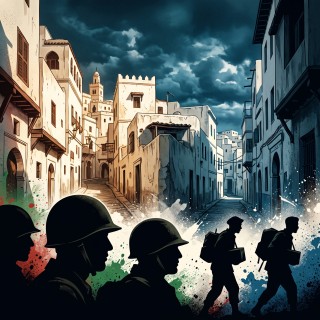
The narrow, labyrinthine alleyways of the ancient Casbah of Algiers turned into a claustrophobic war zone. The FLN shifted to urban terror tactics, deploying concealed bombs in public cafes, transportation hubs, and European gathering spots. Remarkably, Algerian women became key combatants in this shadow war. Disguising themselves in Western clothes or traditional white haiks, female freedom fighters bypassed military checkpoints completely unnoticed, carrying high explosives and weapons hidden in ordinary shopping bags.
In response, the French government dispatched elite paratroopers under General Jacques Massu to dismantle the insurgent underground at any cost. What followed was a relentless and controversial counter-insurgency campaign. Paratroopers sealed off the Casbah, conducting brutal house-to-house sweeps, mass arrests, and systematic interrogations. The widespread use of torture—including electric shocks, forced drownings, and psychological intimidation—became a defining, dark legacy of the French military response. While French forces succeeded in crushing the FLN’s operational network in Algiers, the moral cost was catastrophic. Global media exposed the abuses, shattering France’s international standing and alienating the majority of the Muslim population, proving that winning on the battlefield did not mean winning the political war.
By 1958, the political strain of the war brought France to the brink of civil war. The paralyzed Fourth French Republic collapsed under the pressure of political infighting and military unrest. In desperation, France recalled World War II hero General Charles de Gaulle to lead the nation. Settlers and military leaders cheered De Gaulle’s return, believing he would fight to keep ‘Algérie française’ forever. However, De Gaulle was a cold political realist. Recognizing that holding Algeria by force was economically crippling, morally indefensible, and geopolitically impossible in an era of global decolonization, he gradually moved toward granting Algerian self-determination.
This dramatic shift was viewed as a ultimate betrayal by hardline French soldiers and colonial settlers. Rogue officers formed the Secret Army Organization (OAS), a far-right paramilitary group that launched a desperate campaign of terror, assassinations, and bombings in both Algeria and Paris, even attempting to assassinate De Gaulle himself. Yet, the wheel of history could not be reversed. On March 18, 1962, the Évian Accords were signed, establishing a official ceasefire. A national referendum in July resulted in an overwhelming vote for independence, ending 132 years of French rule.
Freedom, however, arrived amidst profound human tragedy. Nearly one million Pieds-Noirs fled Algeria in a frantic mass exodus, faced with the agonizing ultimatum of ‘the suitcase or the coffin.’ Even worse was the fate of the Harkis—native Algerians who had served alongside the French military. Abandoned by the retreating French forces, tens of thousands of Harkis suffered brutal summary executions at the hands of victorious nationalist forces. The war left up to 1.5 million Algerians dead according to post-war national estimates, leaving deep, unhealed psychological scars on both sides of the Mediterranean. Today, the Algerian War stands as a chilling, thrilling, and tragic chapter of 20th-century history—a story of ultimate resilience against overwhelming odds, and the horrific cost of liberation.