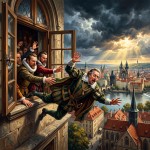

5 minutes of history

5 minutes of history@5minutesofhistory

0 followers
Follow

Season 1 episodes (5)

Storming the Gates of Power: The Wild Story of the French Revolution
S01:E05

Storming the Gates of Power: The Wild Story of the French Revolution

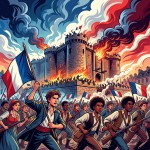
Storming the Gates of Power: The Wild Story of the French Revolution Imagine living in a country where your entire life is decided the moment you are born. If you are born a peasant, you work from sunrise to sunset, pay massive taxes, and often go to bed hungry. If you are born a noble, you live in a glittering palace, wear fine silk, throw lavish parties, and pay absolutely zero taxes. Sounds incredibly unfair, right? Welcome to France in the late 1700s. It was a pressure cooker of anger and hunger waiting to explode. This is the story of the French Revolution—one of the most chaotic, violent, and world-changing events in human history! To understand why France exploded, we have to look at how society was set up. It was split into three strict groups called ‘Estates.’ The First Estate was the Clergy (church leaders). The Second Estate was the Nobility (rich lords and ladies). Together, they made up only 2% of the population but owned most of the land and paid no taxes. The Third Estate was everyone else—a whopping 98% of the people! This included poor farmers, city workers, doctors, lawyers, and shopkeepers. They carried the entire country on their backs, paying all the taxes while having zero say in how France was run. To make matters worse, France was broke. King Louis XVI and his famous queen, Marie Antoinette, loved spending money on wars, jewelry, and their mega-mansion, the Palace of Versailles. At the same time, a terrible winter destroyed crops, making the price of bread—the main food for most French people—skyrocket. People were literally starving in the streets of Paris while the royals feasted on cake and fine meats. Desperate for money, King Louis XVI called a meeting of the Estates-General in 1789, a giant parliament that had not met in 175 years. The Third Estate hoped this was their chance for fairness. But the voting system was rigged. Each Estate got only one collective vote. So, the First and Second Estates would always team up to outvote the Third Estate 2-to-1. Furious, the representatives of the Third Estate broke away, met on a nearby indoor tennis court, and swore a famous promise: the ‘Tennis Court Oath.’ They promised not to leave until they had written a new, fair constitution for France. Things escalated fast. On July 14, 1789, an angry mob in Paris decided they needed weapons to protect themselves against the King’s army. They marched to the Bastille, a giant medieval stone fortress and prison that symbolized the King’s absolute power. With axes and muskets, the crowd stormed the prison, fought the guards, and tore the massive stone walls down, brick by brick, with their bare hands. The French Revolution had officially begun! Today, July 14th is celebrated as Bastille Day, France’s national holiday. At first, the revolution was about making things fair. The new government wrote the ‘Declaration of the Rights of Man,’ declaring that all men are born free and equal. Their slogan was ‘Liberté, Égalité, Fraternité’ (Liberty, Equality, Brotherhood). They wanted a constitutional monarchy where the King had to share power. But things soon spun out of control. Neighboring countries like Austria and Prussia were terrified that this revolutionary fever would spread to their own people, so they declared war on France. Inside France, fear and paranoia grew. Extremists took control of the government, led by a man named Maximilien Robespierre. They decided that to save the revolution, they had to destroy anyone who opposed it. This dark period became known as the ‘Reign of Terror’ (1793–1794). A new invention, the guillotine—a heavy, angled blade that dropped down a wooden frame—became the symbol of this era. King Louis XVI and Marie Antoinette were accused of treason and executed by the guillotine. Anyone suspected of not being enthusiastic enough about the revolution could be arrested and beheaded. Over 17,000 people were officially executed during this terrifying time. Eventually, the people grew tired of the endless bloodshed. Robespierre himself was arrested and sent to the guillotine, ending the Terror. The chaos left France unstable until a brilliant and ambitious young military general named Napoleon Bonaparte stepped in, eventually seizing power and crowning himself Emperor. The French Revolution was a wild, bloody rollercoaster, but it changed the world forever. It proved that ordinary people could stand up against absolute rulers, demand their human rights, and completely reshape society. The modern ideas of democracy, human rights, and equality that we take for granted today were forged in the fiery streets of Paris over two hundred years ago.

The Sun King's Ultimate Power Play: The Wild World of Absolutism
S01:E04

The Sun King's Ultimate Power Play: The Wild World of Absolutism

The Sun King’s Ultimate Power Play: The Wild World of Absolutism Imagine a world where you are the absolute center of the universe. No one can tell you ‘no.’ There are no parents to set a curfew, no teachers to grade your exams, and no police to enforce rules on you. In fact, you make the rules. You can throw massive parties every night, wear shoes with red high heels, and build a palace so big it has its own canal. Sounds like a fantasy, right? Well, for a handful of European kings in the 17th and 18th centuries, this wasn’t a dream—it was daily life. Welcome to the era of Absolutism! To understand this wild period of history, we have to look at the word itself. ‘Absolutism’ comes from the Latin word ‘absolutus’, which means ‘unrestricted’ or ‘complete’. In an absolute monarchy, the king or queen holds total, unchecked power. There is no parliament to vote on laws, no constitution to protect citizens, and no supreme court to challenge the ruler’s decisions. The king was the executive, legislative, and judicial branches of government all rolled into one stylishly dressed person. But how did these rulers convince everyone to go along with this? They used a clever concept called the ‘Divine Right of Kings’. Monarchs claimed that their power came directly from God. Therefore, to disobey the king was not just a crime; it was a sin against God Himself. This made the king virtually untouchable. The undisputed poster boy of Absolutism was King Louis XIV of France. He ruled for a staggering 72 years and became known as the ‘Sun King’. Why the sun? Because Louis believed that just as the planets revolve around the sun, France and its people should revolve around him. He famously declared, ‘L’état, c’est moi!’ which translates to ‘I am the state!’ To show off his immense power, Louis XIV did what any mega-rich influencer today might do: he built the ultimate status symbol. He took a humble hunting lodge outside of Paris and transformed it into the Palace of Versailles, one of the largest and most luxurious palaces in the world. Versailles was a glittering paradise made of marble, gold, and mirrors, surrounded by fountains that sprayed water high into the air. But Versailles wasn’t just a pretty home; it was a clever trap. Louis XIV forced the powerful nobles of France to live there with him. Before Versailles, nobles lived in their own regional castles and often rebelled against the king. By bringing them to his palace, Louis could keep a close eye on them. Even better, he distracted them with a mind-bogglingly complex system of court etiquette. At Versailles, getting dressed in the morning became a highly competitive sport. This ritual was called the ‘lever’. Every morning, high-ranking nobles would gather in the king’s bedroom. The highest honor a noble could achieve was to hold the king’s sleeve while he put on his shirt, or to hand him his golden hairbrush. By keeping the nobles obsessed with silly court rituals, gossip, fashion, and royal favors, Louis ensured they had no time or energy to plot rebellions against him. While Louis and his court were busy wearing giant powdered wigs and dancing at masquerade balls, life outside Versailles was a completely different story. This luxurious lifestyle was incredibly expensive, and someone had to pay for it. In France, society was divided into three groups, called ‘Estates’. The First Estate was the clergy (the church), and the Second Estate was the nobility. Together, they made up only about 2% of the population, owned most of the land, and paid almost zero taxes. The remaining 98% of the people belonged to the Third Estate. This group included wealthy merchants, doctors, lawyers, and a massive population of poor peasants and farmers. The Third Estate had absolutely no say in how the country was run, yet they bore the entire burden of paying the taxes that funded the king’s wars, his standing army, and his glamorous lifestyle at Versailles. To maintain control, absolute rulers like Louis XIV didn’t just rely on divine right and fancy parties; they also built massive, permanent standing armies. In the past, kings only gathered armies during times of war. Now, the king had a professional, loyal army ready to crush any rebellion or fight foreign wars at a moment’s notice. However, this system of total control could not last forever. In the 18th century, a new intellectual movement called the Enlightenment began to sweep across Europe. Philosophers started asking dangerous questions: Why should one man have all the power? Why are some people born with privileges while others starve? They argued that all humans have natural rights to liberty, equality, and property. These revolutionary ideas eventually sparked the French Revolution in 1789. The people of France decided they had had enough of absolute rule. In a dramatic twist of history, the descendants of the Sun King lost not only their absolute power but, in the case of King Louis XVI, their heads. Absolutism was over, paving the way for the modern democratic world we live in today.

1066: The Year of Three Kings and the Clash that Changed the World
S01:E03

1066: The Year of Three Kings and the Clash that Changed the World

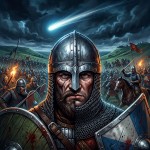
1066: The Year of Three Kings and the Clash that Changed the World Imagine a year so wild, so chaotic, and so packed with betrayal, invasion, and epic battles that it sounds like a fantasy movie. But this isn’t fiction. This is the year 1066, and the crown of England is up for grabs. Grab your sword and shield, because we are diving headfirst into the Norman Conquest—a historical thriller that changed the English-speaking world forever! Our story begins in January 1066 with the death of the English King, Edward the Confessor. Edward died without leaving an obvious heir to the throne, creating a massive power vacuum. Instantly, three powerful men raised their hands, ready to fight to the death for the crown. First, there was Harold Godwinson, the most powerful noble in England. The English council of lords quickly crowned him King Harold II. But across the English Channel, in France, Duke William of Normandy was furious. William claimed that Edward the Confessor had promised him the throne years earlier, and that Harold Godwinson had even sworn a holy oath to support him. To William, Harold was a dirty oath-breaker. Meanwhile, up in Scandinavia, a legendary, giant Viking king named Harald Hardrada decided he should rule England, basing his claim on an old family agreement. With three kings and only one throne, a bloody collision was inevitable. To make things even creepier, a strange blazing star appeared in the sky in April 1066. Today, we know it was Halley’s Comet, but back then, people saw it as a terrifying omen of doom. And doom was indeed coming. First, the Viking king Harald Hardrada invaded the north of England with a fleet of 300 longships. King Harold Godwinson had to march his army over 185 miles north in just four days—an incredible feat! They caught the Vikings completely by surprise at the Battle of Stamford Bridge. In a brutal, exhausting clash, the English defeated the Vikings, and Hardrada was killed. But there was no time to celebrate. Just days later, news arrived that Duke William of Normandy had landed his invasion fleet on the southern coast of England. Harold Godwinson’s exhausted, battle-weary army had to turn around and march all the way back down south. On October 14, 1066, the two armies met near Hastings. This was the moment of truth. King Harold and his Anglo-Saxons took the top of a hill, forming a legendary ‘shield wall.’ Picture thousands of warriors standing shoulder-to-shoulder, locking their wooden shields together to create an impenetrable wooden fortress. William’s Norman knights charged up the hill again and again, but they could not break through. The Anglo-Saxon axes chopped down horses and men alike. The battle raged for hours, and the Normans began to panic, hearing a rumor that Duke William had been killed. To prove he was alive, William tore off his helmet, rode in front of his men, and shouted, ‘Look at me! I live, and by God’s help, I shall conquer!’ Then, the Normans used a brilliant, sneaky tactic. They pretended to run away in panic. Seeing the Normans ‘retreat,’ some of the English soldiers broke their shield wall and chased them down the hill. This was a fatal mistake. Once the English were disorganized, the Normans spun around and cut them to pieces. As the shield wall crumbled, a stray arrow reportedly pierced King Harold right through the eye, killing him instantly. With their leader dead, the English army panicked and fled into the forests. Duke William had won. He marched to London and was crowned King of England on Christmas Day, 1066, earning the nickname we still know him by today: William the Conqueror. This invasion changed England forever. William replaced the English lords with French-speaking Normans. For centuries, the ruling class of England spoke French, while the common people spoke Old English. Over time, these two languages fused together, which is why modern English has so many words of French origin (like ‘castle’, ‘soldier’, and ‘liberty’). William also built massive stone castles all over the country to keep control, including the famous Tower of London. In just one year, the Anglo-Saxon era ended, the Viking age drew to a close, and a new, medieval England was born. It all came down to a shield wall, a fake retreat, and a fateful arrow!
The Night the World Changed: The Incredible Fall of the Berlin Wall
S01:E02

The Night the World Changed: The Incredible Fall of the Berlin Wall

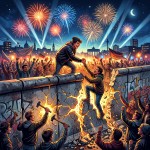
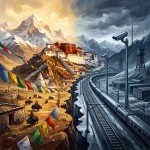
The Night the World Changed: The Incredible Fall of the Berlin Wall Imagine waking up one morning to find a massive wall slicing right through your city. Overnight, your school, your favorite park, and even your friends and family on the other side are suddenly out of reach. Armed guards stand watch, and crossing the line could cost you your life. For the citizens of Berlin, Germany, this nightmare became a reality on August 13, 1961. For twenty-eight years, the Berlin Wall stood as a grim symbol of a divided world. But on one magical, chaotic night in November 1989, ordinary people did the impossible: they brought the Wall tumbling down. To understand why the Wall was built, we have to travel back to the end of World War II. After Germany was defeated, the victorious Allied powers split the country into zones. The Western Allies (the USA, Great Britain, and France) controlled the western part, which became a free, capitalist democracy. The Soviet Union controlled the eastern part, turning it into a communist state. Berlin, the capital city, was located deep inside the communist territory, so it was also split into West and East Berlin. As the years passed, life in democratic West Berlin flourished, while life in communist East Berlin grew increasingly difficult. People had little freedom of speech, and the government spied on its own citizens. Between 1949 and 1961, nearly three million East Germans fled to the West in search of a better life. Desperate to stop this massive brain drain, the East German government decided to block the exit. In the dead of night, soldiers began laying down barbed wire and concrete blocks. The Berlin Wall was born. Over time, the barrier grew into a terrifying complex of two concrete walls separated by a heavily guarded area known as the “death strip.” This strip was filled with landmines, tripwires, vicious guard dogs, searchlights, and armed soldiers who had orders to shoot anyone trying to escape. Despite the danger, people tried incredible, daring escapes. Some dug deep tunnels under the Wall, others built homemade hot air balloons, and a few even drove heavily armored cars straight through the checkpoints! Tragically, at least 140 people lost their lives trying to cross. By the late 1980s, the winds of change began to blow. The Soviet leader, Mikhail Gorbachev, started introducing reforms that allowed more freedom. Inspired by this, citizens in neighboring countries like Poland and Hungary began demanding democracy. In East Germany, hundreds of thousands of brave people took to the streets in peaceful protests, chanting “Wir sind das Volk” (We are the people). The communist government was losing its grip and realized they had to make some concessions to keep the peace. On the evening of November 9, 1989, an East German official named Günter Schabowski held a live, televised press conference to announce a new policy: East Germans would be allowed to travel to the West with proper permission. But there was a massive mix-up. Schabowski hadn’t read the details of the plan before the press conference. When a reporter asked him when these new travel rules would take effect, Schabowski shuffled his papers, looked confused, and replied: “As far as I know, this enters into force… immediately, without delay.” In reality, the law was supposed to start the next morning to give border guards time to prepare. But the news spread like wildfire. Within minutes, thousands of ecstatic East Berliners rushed to the border checkpoints. The guards at the Bornholmer Straße crossing were completely overwhelmed. They tried to call their bosses for orders, but nobody knew what to do. The crowd grew larger, louder, and more determined, chanting, “Open the gate!” Finally, around 11:30 PM, the chief officer at the checkpoint made a historic decision. Rather than risking violence, he ordered his men to open the barriers. East Berliners flooded through, where they were met by cheering West Berliners who handed them flowers, chocolate, and sparkling wine. People climbed on top of the Wall, dancing and singing in the searchlights. Ordinary citizens, nicknamed “Mauerspechte” (Wall peckers), brought out hammers and chisels to chip away chunks of the concrete barrier. The Berlin Wall, which had divided families and symbolized the Cold War for decades, had fallen without a single shot being fired. Less than a year later, Germany was officially reunited. Today, only a few painted sections of the Wall remain as a reminder of a dark time and a testament to the power of ordinary people who dared to dream of freedom.

The Great Castle Plunge: How Three Flying Officials Sparked a World War
S01:E01

The Great Castle Plunge: How Three Flying Officials Sparked a World War

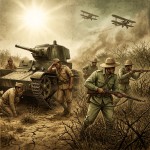
The Great Castle Plunge: How Three Flying Officials Sparked a World War Imagine getting so incredibly angry during a political debate that you don’t just walk out of the room—you literally throw your opponents out of a third-story window. Now, imagine that this exact act of extreme rage-quitting doesn’t just cause a huge scandal, but actually triggers a catastrophic, thirty-year-long war that destroys entire countries and changes the map of Europe forever. It sounds like a scene from an over-the-top fantasy movie, but it actually happened. Welcome to Bohemia (modern-day Czech Republic) on May 23, 1618, the day of the famous Defenestration of Prague. To understand why people were flying out of windows, we have to travel back to a time when Europe was a boiling pot of tension. The big issue of the day was religion. For a long time, the Holy Roman Empire (a massive, messy patchwork of territories in Central Europe) had been split between Catholics and Protestants. Bohemia was a kingdom within this empire where the majority of the people were Protestant. For years, they had been promised the freedom to practice their religion. But things changed when Ferdinand II, a deeply devout Catholic who wanted everyone to be Catholic, was positioned to become the next King of Bohemia and Holy Roman Emperor. Ferdinand started shutting down Protestant churches and tearing up the treaties that guaranteed religious freedom. This did not go down well. The Protestant nobles of Bohemia were furious. They felt betrayed, cornered, and ready to fight back. On the morning of May 23, a massive, angry crowd of Protestant nobles, led by a determined count named Thurn, marched right up to the Hradčany Castle in Prague. They stormed into the council room where four of Ferdinand’s Catholic royal governors were working. After a tense, shouting-match confrontation, the Protestants decided that two of these governors, Wilhelm Slavata and Jaroslav Borzita of Martinice, along with their unlucky secretary, Philip Fabricius, were guilty of violating the religious laws of the land. But they didn’t want to just arrest them. They wanted to send a message that the Emperor in Vienna would never forget. Count Thurn and his men grabbed Martinice, dragged him to the large window, and hoisted him up. With a mighty heave, they pushed him out. He plummeted seventy feet down into the castle moat! Next, they grabbed Slavata. He clung desperately to the window frame, but the nobles beat his hands until he let go, sending him screaming into the abyss. Finally, they grabbed the terrified secretary, Fabricius, and tossed him out after his bosses. This is where the word of the day comes in: “defenestration.” It comes from the Latin words “de” (meaning out of) and “fenestra” (meaning window). So, defenestration literally means “the act of throwing someone out of a window.” Now, falling seventy feet—about the height of a seven-story building—is usually fatal. The Protestant nobles looked down, expecting to see a gruesome scene. But miraculously, all three men survived! How they survived became an immediate battle of propaganda. The Catholics claimed that angels had swooped down from heaven and gently caught the men in their wings. The Protestants, however, had a much dirtier explanation: they claimed the three men survived because they landed in a colossal, soft pile of rotting horse manure that had accumulated in the castle moat over decades. Historical evidence suggests it was likely a combination of sloped castle walls slowing their slide, thick winter clothing cushioning the impact, and a lot of garbage and waste piled up at the bottom. Though battered and bruised, the secretary, Fabricius, managed to stand up, dust off the manure, and run all the way to Vienna to tell Emperor Ferdinand what had happened. This insult was the ultimate declaration of defiance. Ferdinand could not let his representatives be thrown out of windows like trash. He gathered his armies. The Bohemian Protestants gathered theirs. What started as a local rebellion in Prague quickly acted as a spark in a dry forest. Because of complex royal alliances, the conflict expanded rapidly. Soon, Denmark, Sweden, France, Spain, and Great Britain were pulled into the meat grinder. This conflict became known as the Thirty Years’ War (1618–1648). It was one of the most destructive wars in human history, resulting in an estimated 8 million deaths from violence, famine, and disease. It completely reshaped the politics of Europe and ended the era of religious wars on the continent. So, the next time you get into a heated argument, just remember: words are powerful, but throwing someone out of a window might just start a world war!