Gambia: The Slender Ribbon Along the Mighty River’s Course
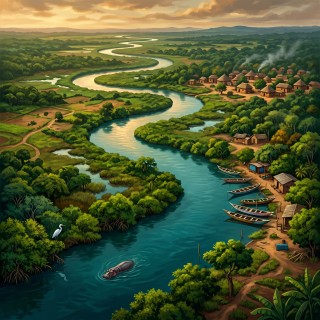
Nestled on the western edge of Africa, Gambia stands as a geographical anomaly and a testament to the enduring power of a river. Often described as a sliver, a ribbon, or even a finger, this nation is almost entirely defined by the Gambia River, carving a path from the Atlantic Ocean deep into the continent and separating the country from its larger neighbor, Senegal. It’s a land of vibrant cultures, breathtaking biodiversity, and a rich, often tumultuous, history, all intrinsically linked to the waterways that sustain it.
The Gambia River isn’t just a geographical feature; it’s the lifeblood of the nation. For millennia, it has served as a highway, a provider of sustenance, and a historical artery. Its banks are fertile, yielding groundnuts, rice, and millet – staples of the Gambian diet and economy. The river itself teems with life: hippos wallow in its muddy stretches, crocodiles bask on its sun-drenched banks, and a myriad of fish species provide livelihoods for countless fishing communities. What role has the Gambia River played in shaping the country’s economic activities?
Historically, the river was a crucial conduit for trade, connecting inland communities with the Atlantic and, by extension, with the wider world. During the era of the transatlantic slave trade, it became a tragic gateway, with many enslaved Africans departing from its shores. James Island, now Kunta Kinteh Island, a UNESCO World Heritage site, stands as a poignant reminder of this dark chapter. Its ruins whisper stories of human suffering and resilience, attracting visitors who seek to understand the profound impact of this period. How does Kunta Kinteh Island serve as a historical testament to Gambia’s past?
Beyond its historical significance, Gambia is a nation brimming with natural beauty. The low-lying landscape, characterized by mangroves, swamps, and savanna, supports an incredible array of wildlife. Birdwatchers flock to its shores, drawn by over 560 species, including rare raptors, colorful bee-eaters, and majestic pelicans. National parks like Kiang West and Tanji are sanctuaries for monkeys, antelopes, and a diverse range of reptiles and amphibians. The coastal areas, with their golden beaches and swaying palm trees, offer a stark contrast to the verdant riverine interior, attracting tourists seeking relaxation and adventure. What makes Gambia a significant destination for ecotourism, particularly for birdwatching?
The people of Gambia, often called ‘Gambians,’ are renowned for their warmth, hospitality, and resilience. A melting pot of ethnic groups, including the Mandinka, Fula, Wolof, Jola, and Serahule, they coexist peacefully, contributing to a rich tapestry of traditions, languages, and cuisines. Jollof rice, benachin, and domoda are culinary delights that reflect the nation’s diverse heritage. Storytelling, music, and dance are integral to their cultural fabric, often accompanied by the kora, a 21-stringed instrument that produces enchanting melodies. How do the diverse ethnic groups of Gambia contribute to its cultural richness?
Despite its charm and natural beauty, Gambia faces significant challenges. Economic development, particularly outside the tourism sector, remains a priority. Infrastructure improvements, access to quality education, and healthcare are ongoing efforts. Political stability, though improving after a period of authoritarian rule, requires constant nurturing. The delicate balance between preserving its natural environment and fostering sustainable economic growth is a perpetual challenge. What are some of the key developmental challenges currently facing Gambia?
However, the spirit of Gambia remains undaunted. Its people, armed with an unwavering sense of community and a deep connection to their land and river, are striving for a brighter future. Initiatives focusing on eco-tourism, community empowerment, and sustainable agriculture are gaining traction, promising to harness the nation’s unique assets for the benefit of all. The slender ribbon of land, cradled by its mighty river, continues to flow forward, carrying with it the hopes and dreams of a vibrant nation.
In essence, Gambia is more than just a geographical curiosity; it’s a vibrant, living entity, intricately woven into the fabric of the Gambia River. It’s a place where history resonates in the whispers of the wind, where nature thrives in breathtaking abundance, and where the human spirit triumphs amidst adversity. Its story is a testament to how a small nation, defined by a single waterway, can leave an indelible mark on the world. What does the future hold for Gambia, considering its focus on sustainable development and community empowerment?