No transcript available for this episode.
S01:E134
San Marino: The Stonecutter Against the Emperor – The Flight from Diocletian (301 AD)
The year is 301 AD. The Roman Empire, a sprawling colossus of power and culture, is gripped by a fervor that would forever mark its history: the Great Persecution. At its helm, Emperor Diocletian, a man of immense ambition and an unshakeable belief in the old gods, sought to unify his vast domain under a single religious banner. For the burgeoning Christian communities, this meant one thing: choose between their faith and their lives.
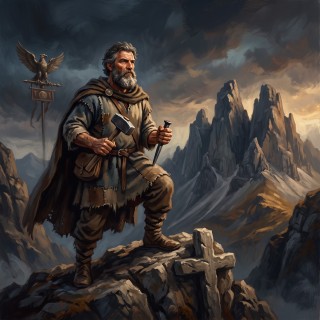
In the vibrant port city of Arba (modern-day Rab, Croatia), on the eastern coast of the Adriatic, lived a humble stonecutter named Marinus. Not just any stonecutter, Marinus was a devout Christian, his faith a quiet but unyielding flame in his heart. His skills were renowned; he could cleave rock with precision, shaping the raw earth into forms of beauty and utility. Yet, his greatest creation would not be of stone, but of an idea – an enduring sanctuary born from persecution.
The imperial edicts grew ever more severe. Churches were razed, scriptures burned, and Christians, from common laborers to noblemen, were forced to make public sacrifices to Roman deities or face torture and death. The air was thick with fear and the scent of impending doom. Marinus, like countless others, found himself caught in the tightening net of imperial decree. He understood the gravity of his situation: to stay was to deny his God or to perish. His choice, though difficult, was clear.
Gathering a small band of fellow believers, Marinus embarked on a perilous journey across the Adriatic Sea. Their destination was the rugged, untamed Italian peninsula, specifically the remote Monte Titano, a formidable peak rising sharply from the surrounding landscape. It was a place of wild beauty and isolation, a natural fortress that offered a promise of refuge from Diocletian’s wrath.
The voyage itself was fraught with danger. The Adriatic, often calm, could turn treacherous without warning. Yet, guided by an unwavering hope, they eventually reached the Italian coast. From there, their climb began. Monte Titano was no gentle ascent; it demanded strength, endurance, and an unshakeable will. Marinus, with his stonecutter’s robust physique, led the way, his eyes fixed on the summit – a beacon of freedom.
Upon reaching the plateau near the peak, they found a challenging, yet ultimately defensible, environment. The land was barren in places, yet offered springs of fresh water and natural caves for shelter. Marinus, leveraging his immense skill, immediately set to work. He wasn’t merely seeking shelter; he was building a community, a haven. With his tools, he carved out living spaces from the rock, creating rudimentary dwellings and perhaps even a small chapel where they could practice their faith without fear of discovery.
The years that followed were a testament to their resilience. They lived off the land, cultivating what they could, and maintaining a cautious vigilance. News of Diocletian’s continued persecution likely reached them, reinforcing the wisdom of their arduous flight. Their isolation, initially a burden, became their greatest protector. They were a tiny, almost invisible speck on the vast canvas of the Roman Empire, yet they carried within them the seeds of a new beginning.
Marinus, the humble stonecutter, became more than just a leader; he became a symbol of steadfast faith and the indomitable human spirit. He ministered to his small flock, guiding them not just in their physical survival but also in their spiritual well-being. His life on Monte Titano exemplified the power of conviction, a refusal to bow to tyrannical power, and the profound human need for freedom of conscience.
Eventually, Diocletian’s persecution waned, and the Roman Empire itself began its slow, complex conversion to Christianity. But by then, the community on Monte Titano had taken root. Marinus, the saintly stonecutter, passed away, but his legacy endured. The small settlement he founded grew, attracting others seeking peace and autonomy. This nascent community, born of necessity and nurtured by faith, would eventually become the Most Serene Republic of San Marino, the world’s oldest surviving sovereign state and a powerful testament to one man’s courageous flight from an emperor’s wrath. It is a story not just of escape, but of creation – the creation of a nation from a stonecutter’s defiant spirit.
What truly motivated Marinus to undertake such a dangerous journey? Was it solely religious conviction, or was there also a profound desire for self-determination that resonated deeply within him? How did the harsh environment of Monte Titano shape the character and resilience of the early San Marinese community? And what lessons can modern societies draw from this ancient tale of refuge and foundation?