0:00Intro
The Architect of Sound: The Wild, Genius Life of Johann Sebastian Bach
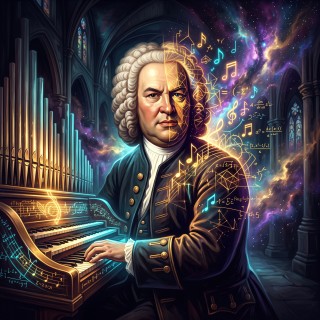
When we picture Johann Sebastian Bach today, we often imagine a serene, stoic man in a powdered wig, sitting quietly at a church organ. But wipe that static oil painting from your mind. The real story of Bach is a high-octane tale of raw talent, ferocious hot-headedness, street brawls, prison time, and an obsessive, almost superhuman drive to decode the secret language of the universe through sound.
Born in 1685 in Eisenach, Germany, Bach was thrust into a dynasty of musicians, but tragedy struck early. By the age of ten, both of his parents were dead. Left in the care of his older brother, young Johann Sebastian showed an insatiable, almost desperate hunger for music. When his brother locked away a manuscript of rare musical scores behind a wooden lattice, the young boy spent six months secretly slipping his small hands through the grill at night, copying every single note by candlelight. This relentless obsession set the stage for a life defined by unwavering determination.
Bach wasn’t just a prodigy; he was a passionate rebel. As a teenager, his fanaticism for music drove him to walk over 250 miles (400 kilometers) on foot from Arnstadt to Lübeck just to hear the legendary organist Dieterich Buxtehude play. He was supposed to be away for a few weeks, but he stayed for four months, mesmerized, absorbing every technique like a sponge. When he finally returned to his employer, he was filled with bold, radical ideas that bewildered his congregation and infuriated his superiors.
His temper was as explosive as his virtuosity. In Arnstadt, annoyed by a student bassoonist who couldn’t keep up, Bach publicly insulted him as a ‘zippelfagottist’ (a ‘greenhorn bassoonist’). The insulted student attacked Bach in the street with a walking stick; Bach pulled out his dagger, and a wild brawl ensued in the town square. Years later, when Bach tried to quit his job at the court of Weimar to take a higher-paying position in Köthen, the Duke of Saxe-Weimar was so outraged by Bach’s defiance that he threw the composer into prison. Most people would have crumbled, but Bach spent his month in a jail cell composing a series of complex organ preludes.
What made Bach truly legendary was his revolutionary vision of harmony and counterpoint. He didn’t just write melodies; he built multidimensional cathedrals of sound. Through counterpoint—the art of weaving multiple independent melody lines together simultaneously—he achieved a level of mathematical precision and emotional depth that had never been heard before. His famous work, The Well-Tempered Clavier, demonstrated a revolutionary system of tuning that allowed musicians to play in any key without sounding out of tune, effectively rewriting the rules of Western music forever.
Life was a relentless grind. As the Cantor of St. Thomas Church in Leipzig, Bach was tasked with educating schoolchildren, playing the organ, and writing a brand-new, complex piece of church music—a cantata—every single week. Imagine writing, copying out parts for, rehearsing, and performing a custom 20-minute musical masterpiece every seven days, all while raising a massive family. Bach fathered 20 children across two marriages (first to Maria Barbara, and later to Anna Magdalena), creating a bustling household filled with instruments, crying babies, and copying ink.
Yet, toward the end of his life, Bach’s complex style was dismissed by younger generations as outdated and overly complicated. He was going blind, suffering from cataracts. Desperate to keep working, he agreed to eye surgeries performed by John Taylor, a notorious traveling charlatan doctor. The botched surgeries left Bach completely blind and severely infection-ridden, accelerating his death in 1750.
After his death, Bach’s music was almost forgotten by the general public, preserved only by a small group of connoisseurs. It took nearly a century for the world to catch up. In 1829, a young Felix Mendelssohn staged a performance of Bach’s St. Matthew Passion, sparking a global renaissance. Today, Johann Sebastian Bach is recognized not as an outdated relic, but as the supreme master of Western music—a man whose works were beamed into deep space on the Voyager Golden Record as the ultimate representation of human creativity.