The Corpse on Trial: Rome’s Most Macabre Courtroom Drama – The Cadaver Synod (897)
Imagine a courtroom. The air is thick with anticipation, not of justice, but of a grotesque spectacle. The judge, Pope Stephen VI, glares from his throne. The accused? Not a living soul, but a decaying, nine-month-old corpse, propped upright, dressed in full papal regalia, its vacant eye sockets staring into eternity. Welcome to the Cadaver Synod of 897, a moment in history so bizarre, so chillingly theatrical, it feels ripped from the darkest pages of gothic fiction.
Our story begins with Formosus, the deceased Pope, whose pontificate (891-896) was marked by political maneuvering and shifting allegiances within the fragmented Holy Roman Empire. Formosus had, at various points, been excommunicated, reinstated, and then, controversially, crowned Arnulf of Carinthia as Emperor. He was a man of ambition, and like many powerful figures of his era, he made enemies. One such enemy was his successor, Stephen VI, who harbored an intense, almost pathological, hatred for Formosus.
Stephen VI’s animosity stemmed from Formosus’s alleged violation of canon law, specifically a prohibition against a bishop moving from one see to another. Formosus had been Bishop of Portus before becoming Pope, a move Stephen VI deemed uncanonical and, crucially, a violation of an oath Formosus had taken never to return to Rome or exercise ecclesiastical functions there after an earlier excommunication. Stephen, however, twisted these accusations into a truly outrageous charge: perjury.
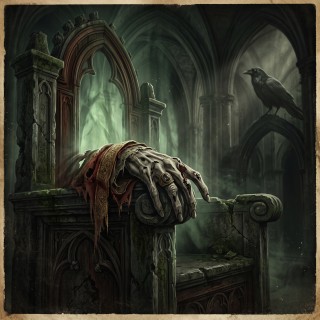
Driven by a potent mix of political opportunism and personal vendetta, Stephen VI decided to put Formosus on trial. But how do you try a dead man? Stephen’s solution was as audacious as it was horrifying: exhume the corpse. In January of 897, Formosus’s body was dug up from its tomb in St. Peter’s Basilica. What must have been the scene? The stench, the ghoulish sight of the decomposing Pontiff, dragged from his eternal rest to face earthly judgment. The cadaver was then brought to the Basilica of St. John Lateran, Rome’s cathedral, and placed on a throne.
Before the assembled bishops and Roman nobility, the trial commenced. A deacon was appointed to stand beside the corpse and answer on its behalf. The charges were read: perjury, ambition in seeking the papacy, and transmigrating from one see to another in violation of canon law. Stephen VI, reportedly frothing with rage, interrogated the silent, rotting figure. Can you imagine the spectacle? The living Pope, condemning the dead, demanding answers from a mouth that could only offer the silence of the grave.
Unsurprisingly, the Cadaver Synod found Formosus guilty on all counts. The verdict was a foregone conclusion. The judgments that followed were as brutal as they were symbolic. All of Formosus’s acts as Pope were declared null and void. The papal robes were stripped from the corpse, and the three fingers of its right hand, used for blessings, were severed. Then, in a final act of desecration, the body was dragged through the streets of Rome and eventually thrown into the Tiber River. It was a clear message: Formosus was not only dead, but his memory and legacy were to be utterly erased.
However, the Cadaver Synod proved to be a spectacular miscalculation for Stephen VI. The Roman populace, initially shocked, soon grew disgusted by the sheer barbarity of the event. The act was seen as an affront to human dignity and a sacrilege against the sanctity of the papacy. Public outcry quickly mounted. A few months later, a popular uprising led to Stephen VI’s imprisonment. He was subsequently strangled to death in his cell.
The Cadaver Synod stands as one of the darkest and most bizarre chapters in papal history. It reflects a period of extreme political instability in Rome, where the papacy was a pawn in the hands of powerful Roman noble families. While Formosus’s body was later recovered from the Tiber, reburied, and his pontificate eventually reinstated, the memory of the ‘Corpse on Trial’ serves as a chilling reminder of the lengths to which power struggles and personal vendettas could go in the medieval world. It’s a testament to the fact that even in the highest echelons of spiritual authority, human fallibility, and outright madness, could prevail, creating a spectacle that continues to shock and fascinate over a millennium later.