The Dancing Plague of 1518: Strasbourg’s Terrifying Tango with Madness
Imagine a summer. Not one of gentle breezes and leisurely strolls, but one consumed by an unstoppable, inexplicable urge to dance. Not for a few hours, or even a day, but for weeks on end, until your feet were raw, your heart pounded a relentless rhythm, and exhaustion became a terrifying, inevitable end. This was the chilling reality of Strasbourg in 1518, a historical anomaly so bizarre it continues to baffle and fascinate scholars: the Dancing Plague.
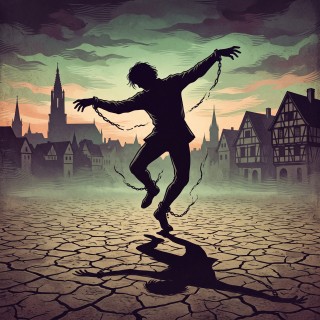
It began subtly enough in July of that year. A woman named Frau Troffea stepped into the streets of Strasbourg and simply… started to dance. Not a graceful waltz or a lively jig, but a compulsive, involuntary flailing that she seemed unable to stop. Initially, curious onlookers might have dismissed it as an eccentric display, perhaps a bout of summer madness. But then, another person joined her, then another, and soon, the streets of Strasbourg were filled with dozens, then hundreds, of people caught in an inescapable, frenzied dance. They twirled, they convulsed, they swayed, their bodies moving to an unheard, relentless beat.
Witness accounts describe a scene of utter pandemonium. These weren’t joyous revelers; their faces were often contorted in agony, their movements desperate and uncontrolled. They danced until their shoes wore through, until their limbs cramped, until they collapsed from sheer exhaustion, only to rise again and continue their macabre performance. The city authorities, initially at a loss, tried various remedies. They consulted physicians, astrologers, and even priests. Their initial diagnosis? “Hot blood.” Their proposed solution? More dancing. Yes, in a truly bewildering turn of events, the city council decided the afflicted needed to dance it out. They opened guild halls, erected stages, and even hired musicians, believing that if the dancers could just exhaust the ‘hot blood’ from their systems, they would recover. This proved to be a catastrophic miscalculation.
The music, intended to provide a regulated rhythm, only seemed to fuel the frenzy. The constant movement, the lack of sleep, and the sheer physical exertion began to take their toll. Deaths became increasingly common, not from injury, but from heart attacks, strokes, and overwhelming exhaustion. Estimates suggest that at its peak, the plague claimed up to 15 lives a day. The streets, once filled with the mundane sounds of a bustling city, echoed with the shuffling of hundreds of feet, the gasps of the afflicted, and the cries of their desperate families.
As August wore on, the epidemic began to wane as mysteriously as it had begun. The number of dancers dwindled, and the city slowly returned to a semblance of normalcy, scarred by the memory of its terrifying summer. But what caused this bizarre phenomenon? The Dancing Plague of 1518 remains one of history’s most enduring medical mysteries, a testament to the fragile line between order and chaos, and the immense power of the human psyche.
Numerous theories have been proposed over the centuries. Some point to ergotism, a poisoning caused by fungus on rye bread, which can induce convulsions and hallucinations. However, ergotism typically presents with gangrene and other severe physical symptoms that were not widely reported. Others suggest mass psychogenic illness, a form of hysteria where psychological stress manifests as physical symptoms within a group. Strasbourg in 1518 was a city ripe for such an outbreak: famine, disease, and political unrest had created a deeply stressed population. The belief in curses and supernatural possession was also prevalent, potentially providing a framework for understanding such an inexplicable affliction.
The Dancing Plague serves as a chilling reminder of how little we truly understand about the complexities of the human mind and its interaction with the body and environment. It challenges our assumptions about illness and sanity, leaving us to wonder what unseen forces might still lurk beneath the surface of collective consciousness. Was it a toxin, a mass delusion, or something else entirely? Five centuries later, the citizens of Strasbourg danced their way into the annals of history, leaving us with a perplexing, mesmerizing, and utterly terrifying tale of a summer when the music never stopped, until it tragically did.