No transcript available for this episode.
S01:E18
The Dawn of Glory: The Birth of the Ancient Olympic Games
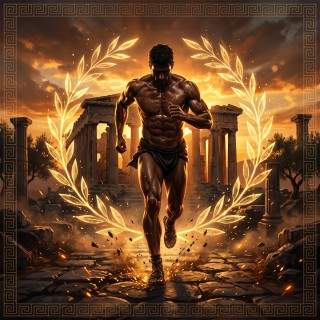
The year is 776 BCE. Under the blistering midsummer sun of the Peloponnese, a tense silence falls over the sacred valley of Olympia. Thousands of spectators—philosophers, soldiers, peasants, and politicians—strain their necks to glimpse the dusty running track. At the starting line, carved from solid white limestone, stand the finest athletes of the Greek world. They are naked, their skin glistening with olive oil, their muscles taut with anticipation. A trumpet blasts, shattering the silence. The runners surge forward in a flurry of dust and raw power. This was the birth of the Olympic Games, an event that would transcend warfare, unite a fractured civilization, and echo through nearly three millennia of human history.
To understand the ancient Olympics, one must understand the world from which they emerged. Ancient Greece was not a single, unified nation, but a chaotic patchwork of fiercely independent city-states. Athens, Sparta, Corinth, and Thebes were locked in a perpetual cycle of bloody wars and political rivalries. Yet, every four years, an extraordinary phenomenon occurred: the Ekecheiria, or the Sacred Truse. Messengers known as Spondophoroi traveled across the Greek world to announce the upcoming games. Instantly, all hostilities were suspended. Roads became safe, armies laid down their weapons, and enemies marched side by side toward the sanctuary of Olympia. It was a triumph of diplomacy and shared culture over bloodshed, proving that the pursuit of excellence could unite even the most bitter rivals.
The origin of the games is shrouded in the mists of mythology. Some legends attribute the founding to the demigod Heracles, who marked out the boundaries of the sacred grove (the Altis) and ran a race with his brothers to honor their father, Zeus. Another myth tells of Pelops, a heroic prince who won the hand of his bride in a deadly chariot race against a treacherous king. Whether born of myth or practical diplomacy, the historical games of 776 BCE began with a single event: a footrace called the stadion, measuring roughly 192 meters—the exact distance legendary Heracles could supposedly run on a single breath. The winner of this inaugural race was Coroebus of Elis, a humble baker. He did not receive gold or silver; instead, he was crowned with a simple wreath of wild olive leaves, the kotinos. Yet, this baker’s name would be etched in history forever as the world’s very first Olympic champion.
As the centuries passed, the Olympics expanded from a single-day running event into a spectacular five-day festival of athletic and religious devotion. New, grueling events were introduced. There was the diaulos (a double-length footrace) and the dolichos (a long-distance run of up to twenty-four laps). Then came the combat sports, which captivated the ancient crowds with their raw intensity. Wrestling and boxing were highly technical, but nothing compared to the pankration. A brutal, near-no-holds-barred combination of grappling and striking, the pankration only forbade biting and eye-gouging. Athletes fought until one surrendered or was knocked unconscious, sometimes even to the death.
Perhaps the most prestigious and dangerous event was the chariot race, held in the hippodrome. Wealthy aristocrats, including kings and queens, funded these high-speed spectacles, where twelve chariots would hurtle around sharp turns, often colliding in catastrophic wrecks known as ‘shipwrecks.’
Yet, the Olympics were never solely about athletics; they were deeply spiritual. Olympia was a sacred sanctuary, not a city. At its heart stood the colossal Temple of Zeus, housing one of the Seven Wonders of the Ancient World: a giant gold-and-ivory statue of the king of the gods, sculpted by Phidias. On the third day of the games, a magnificent procession wound through the sanctuary, culminating in the sacrifice of one hundred oxen on the great altar of Zeus. The atmosphere was a chaotic, vibrant sensory overload of roasting meat, incense, street performers, poets reciting their latest works, and vendors selling souvenirs.
For an athlete, winning at Olympia was the ultimate achievement, bringing immortal glory. Upon returning to their home city-states, victors were treated as demigods. They received free meals for life, tax exemptions, front-row seats at theaters, and huge cash bonuses. Sculptors carved their likenesses in bronze and stone, ensuring their physical perfection would be remembered forever.
For over a thousand years, the Olympic flame burned bright. However, as the Roman Empire embraced Christianity, the ancient games came to be viewed as a pagan ritual. In 393 CE, Emperor Theodosius I officially banned the games, bringing an end to a glorious era. The temples of Olympia were eventually shattered by earthquakes and buried beneath river silt. Yet, the spirit of Olympia could not be destroyed. In 1896, the games were reborn in Athens, reviving the ancient ideal of peaceful athletic competition. Today, when the Olympic torch is lit, it carries the flame of those ancient runners who, thousands of years ago, ran through the dust of Olympia in pursuit of eternal glory.