0:00Intro
The Day the World Changed: Unveiling 9/11
September 11, 2001. A date etched into the collective memory of humanity, a day that began like any other, but ended with an unimaginable rupture in the fabric of global peace and security. What happened on 9/11 was not merely an attack; it was a meticulously planned act of terror that reshaped international relations, redefined national security, and left an enduring scar on the American psyche.
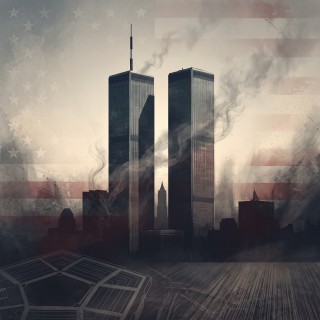
The morning commenced with clear blue skies over the East Coast of the United States. Then, at 8:46 AM Eastern Daylight Time, American Airlines Flight 11, a Boeing 767, slammed into the North Tower of the World Trade Center in New York City. The impact, initially dismissed by some as a tragic accident, was soon understood to be something far more sinister. Just seventeen minutes later, at 9:03 AM, United Airlines Flight 175, another Boeing 767, struck the South Tower. The sheer scale and coordination of these attacks instantly signaled a premeditated act of war, transforming the iconic skyscrapers into infernos.
The world watched in horror as thick plumes of smoke billowed from the towers, and then, in a devastating cascade of events that seemed to defy belief, the South Tower collapsed at 9:59 AM. The North Tower followed suit at 10:28 AM, sending a monumental cloud of dust and debris engulfing lower Manhattan. These collapses, unprecedented in scale for such modern structures, were a testament to the immense kinetic energy of the impacts and the intense heat generated by the jet fuel fires.
But New York was not the sole target. At 9:37 AM, American Airlines Flight 77, a Boeing 757, crashed into the Pentagon in Arlington, Virginia, the very heart of the U.S. military. This attack, though less visually dramatic than the World Trade Center collapses, was equally symbolic, aiming at the nation’s defense apparatus. A massive fire erupted, and a portion of the building’s exterior wall collapsed, claiming many lives.
The fourth hijacked plane, United Airlines Flight 93, a Boeing 757, took off from Newark, New Jersey, also bound for the West Coast. However, its trajectory took a different turn. Passengers and crew, alerted to the ongoing attacks through phone calls, bravely fought back against the hijackers. Their courageous struggle prevented the terrorists from reaching their intended target, widely believed to be either the U.S. Capitol Building or the White House. At 10:03 AM, Flight 93 crashed into a field in Stonycreek Township, Pennsylvania, saving countless lives but sacrificing all on board.
Who was behind these horrific acts? The attacks were orchestrated by al-Qaeda, an Islamist terrorist organization led by Osama bin Laden. Their motive, rooted in a complex blend of anti-Western ideology, resentment over U.S. foreign policy in the Middle East, and a desire to provoke a global holy war, aimed to inflict maximum casualties and psychological damage on the United States. Bin Laden, who had declared war on the U.S. years earlier, viewed the attacks as a divine retribution and a means to weaken American influence worldwide.
The immediate aftermath of 9/11 was a period of profound shock, grief, and national unity. The loss of nearly 3,000 lives – civilians from over 90 nations, first responders who rushed into danger, and military personnel – was a staggering blow. The economic impact was immediate and severe, particularly for New York City’s financial sector and the airline industry. Globally, air travel was disrupted, and security measures at airports and borders were drastically enhanced, forever changing the way people travel.
In the longer term, 9/11 fundamentally altered U.S. foreign policy, leading to the ‘War on Terror,’ invasions of Afghanistan and Iraq, and a global campaign against extremist groups. The Department of Homeland Security was created, intelligence agencies were reorganized, and surveillance capabilities expanded. The attacks also sparked a worldwide debate about terrorism, civil liberties, and the balance between security and freedom.
Even two decades later, the echoes of 9/11 resonate. Memorials stand as poignant reminders of the lives lost, and the events of that day continue to shape political discourse, security protocols, and even popular culture. It was a day that laid bare the vulnerabilities of a globalized world and underscored the enduring power of human resilience in the face of unspeakable tragedy. What happened on 9/11 wasn’t just a moment in history; it was a turning point that redefined the course of the 21st century.