No transcript available for this episode.
S01:E68
The Silent Breath of Death: The 1986 Lake Nyos Disaster
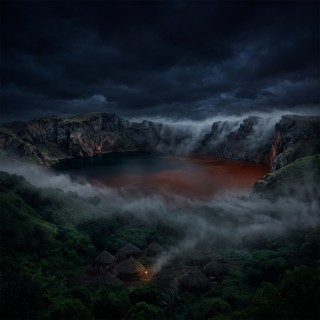
On the warm evening of August 21, 1986, the villagers of the Oku volcanic field in northwestern Cameroon were preparing for sleep. Crickets buzzed in the dense tropical grass, cattle shifted lazily in their pens, and kerosene lamps flickered across the valleys of Nyos, Kam, and Cha. Towering above them sat Lake Nyos, a tranquil body of water nestled inside a dormant volcanic crater, its deep blue surface reflecting the starlit equatorial sky. Locals regarded the lake with quiet reverence, weaving legends of restless spirits inhabiting its depths. They could never have imagined that beneath that glassy stillness lay an invisible bomb waiting to detonate.
Deep beneath the lake floor, miles down within the Earth’s crust, a chamber of molten magma continually seeped volcanic gases upward. Chief among these was carbon dioxide (CO2). Unlike typical volcanic lakes where gases bubble harmlessly to the surface and disperse into the atmosphere, Lake Nyos acted as a colossal, pressurized soda bottle. The lake was extraordinarily deep—over 200 meters—and tropical temperatures prevented the surface water from mixing with the cold, dense depths. For centuries, the immense hydrostatic pressure at the bottom held an astronomical amount of dissolved carbon dioxide in solution, saturating the water to a lethal, hyper-concentrated degree. It was a fragile, unstable equilibrium that required only the slightest disturbance to shatter.
Around 9:30 PM, something broke the tension. Scientists still debate the exact trigger—a minor tremor, a sudden rockslide from the crater wall, or heavy rainfall that upset the thermal layering. Regardless of the spark, the consequence was apocalyptic. A column of deep, gas-saturated water surged upward. As the hydrostatic pressure dropped, the dissolved gas violently effervesced out of solution, expanding exponentially. A catastrophic limnic eruption had begun.
A massive geyser of water and foam exploded over 300 feet into the air, creating a mini-tsunami that stripped the shoreline bare of trees and topsoil. But water was not the true danger. Vomiting forth from the belly of the lake came a monolithic cloud of pure carbon dioxide—an estimated 1.2 million metric tons of dense, odorless, invisible gas. Because CO2 is significantly heavier than ambient air, the cloud did not rise into the atmosphere. Instead, it tumbled over the crater rim and cascaded down the lush green valleys like an invisible avalanche, moving at speeds between 20 and 50 kilometers per hour.
As the vapor rolled across the settlements of Nyos, Subum, and Cha, it completely displaced the breathable oxygen. The attack was totally silent, leaving no sensory warning. Those who were awake noticed a faint, metallic odor or a warm sensation in their throats, followed immediately by overwhelming drowsiness, disorientation, and sudden unconsciousness. Campfires instantly sputtered out, deprived of oxygen. Oil lamps died. Cattle collapsed where they stood. Birds plummeted lifelessly from their perches in the trees.
Inside their thatched homes, families were smothered in their beds without ever waking up. Entire households ceased breathing in unison, caught in a painless yet inescapable vacuum of pure asphyxiation. In total, 1,746 human lives were extinguished across a 25-kilometer radius within mere minutes, accompanied by more than 3,500 livestock animals. Only a tiny fraction of residents survived, mostly those who happened to be on elevated ground or perched on roofs where the gas layer was thinner, or those who drifted into deep comas and managed to awaken hours later after the cloud had dispersed.
When dawn broke, the magnitude of the horror was revealed. The once-crystalline blue lake had turned a ghastly, rust-red color as iron-rich deep water surged to the surface and oxidized in the air. The valley below was cloaked in a deafening silence; not an insect chirped, not a rooster crowed, not a dog barked. Bloated cattle lay strewn across pastures, and streets were littered with the bodies of victims who looked as though they were merely frozen in sleep.
International volcanologists rushed to the scene, baffled by an event unprecedented in modern science. Through painstaking geological forensics, they identified the phenomenon as a ‘limnic eruption’—one of the rarest natural disasters on Earth. To ensure this tragedy would never recur, engineers later installed self-siphoning degassing pipes deep into Lake Nyos, allowing dissolved gas to vent steadily and safely into the atmosphere, permanently releasing the pressure of the sleeping giant.