
0:00Intro
The Somerton Man Mystery: A Cold Case That Chills to the Bone
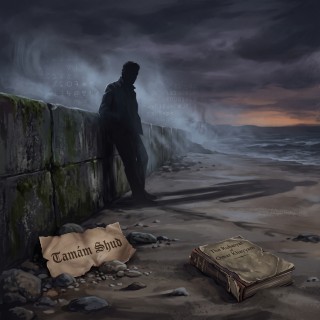
Picture this: a serene December morning on an Australian beach, the gentle lapping of waves, and the rising sun casting long shadows. But this picturesque scene is about to be shattered by a discovery that would launch one of the most enduring and perplexing cold cases in history. On December 1, 1948, on Somerton Beach, South Australia, an impeccably dressed man was found deceased, slumped against a seawall. He seemed to be merely sleeping, but his stillness was unnerving. He was gone.
From the outset, the Somerton Man, as he came to be known, was a riddle wrapped in an enigma. There were no obvious signs of struggle or violence. His pockets contained an unused train ticket from Adelaide to Henley Beach, a bus ticket, a comb, a packet of Army Club cigarettes (a brand he didn’t smoke, as a half-smoked packet of more expensive Kensitas cigarettes was also found), a box of matches, and two chewing gum packets. All fairly mundane, right? Wrong. Every identifying label, from his clothing to his possessions, had been meticulously removed. His wallet was missing, and his dental records yielded no matches. He had no identification. It was as if he had been scrubbed from existence, a ghost in human form.
But the mystery deepened, layer by tantalizing layer. An autopsy revealed no clear cause of death, suggesting poisoning, though no trace of a common toxin was found. His spleen was enlarged, and there was congestion in his brain and liver, consistent with poisoning, yet the specific agent remained elusive. The pathology report simply deepened the quagmire of uncertainty.
Then came the breakthrough, or so it seemed. Weeks later, during a more thorough examination of the man’s clothes, a tiny, rolled-up piece of paper was discovered sewn into a hidden fob pocket in his trousers. On it, two words were printed: ‘Tamám Shud’. This phrase, meaning ‘finished’ or ‘ended’ in Persian, was traced to the final page of a collection of poems known as ‘The Rubaiyat of Omar Khayyam’.
This discovery ignited a frantic search. Eventually, a copy of the ‘Rubaiyat’ was found in the back seat of an unlocked car parked near Somerton Beach around the time of the man’s death. The book was missing the very page from which the ‘Tamám Shud’ scrap had been torn. What’s more, faint indentations on the book’s back cover revealed five lines of seemingly coded text, alongside a phone number. This wasn’t just a dead man on a beach anymore; this was something out of a spy novel.
The phone number led to a woman named Jessica Thomson (later known as Jo Thomson), who lived in Glenelg, not far from where the body was found. When shown a plaster bust of the deceased, she reportedly reacted with a visible shock, almost fainting, but claimed not to know the man. However, she admitted to owning a copy of the ‘Rubaiyat’ which she had given to a man named Alfred Boxall during World War II. Boxall, however, was very much alive and still possessed his copy of the ‘Rubaiyat’, complete with its ‘Tamám Shud’ page intact. The plot thickened, creating a baffling discrepancy.
Over the decades, theories abounded. Was he a Cold War spy, his mission completed or compromised? Was it a lovers’ pact gone wrong, or a carefully orchestrated murder? The coded message has never been definitively deciphered, despite numerous attempts by cryptographers. Each proposed solution only seemed to lead to more questions, like echoes in a vast, empty hall.
Recent developments have offered a glimmer of hope. In 2022, Professor Derek Abbott, an electrical engineering professor at the University of Adelaide, a long-time investigator of the case, announced that DNA analysis of hair found on the Somerton Man’s bust had identified him as Carl ‘Charles’ Webb. This identification, while significant, has been met with caution by official authorities, who are yet to formally confirm it. If confirmed, this would be a monumental step, solving the decades-long mystery of his identity. But even if his name is known, the circumstances of his death, the ‘Tamám Shud’ scrap, the coded message, and the enigmatic Jessica Thomson remain largely unexplained.
The Somerton Man case continues to captivate and mystify, a testament to the enduring power of an unsolved puzzle. It serves as a stark reminder that sometimes, even with the most thorough investigations, some secrets are so deeply buried that they resist all attempts at excavation. Will we ever truly know what happened on Somerton Beach that fateful morning? Or will the Somerton Man forever remain ‘finished’, his story untold, his secrets taken to the grave?