The Unfinished Symphony: Can Ireland Be Reunified?
The emerald isle, a land steeped in history, myth, and enduring division. For over a century, the question of Irish reunification has simmered, occasionally boiling over into violent conflict, before receding into the complex tapestry of political discourse. But in the wake of Brexit, shifting demographics, and evolving political landscapes, the prospect of a united Ireland has re-emerged with a renewed, and some would say, urgent, vibrancy. Can Ireland truly be reunified? The answer is as multifaceted and intricate as the island itself.
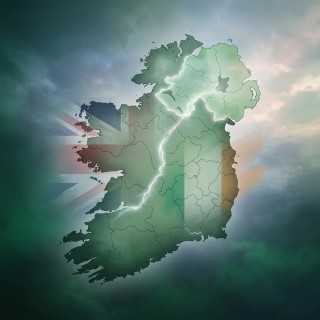
At the heart of the debate lies a profound historical grievance. The partition of Ireland in 1921, a direct consequence of British colonial rule and the fierce resistance of Ulster Unionists, carved the island into two distinct entities: the independent Republic of Ireland and Northern Ireland, remaining part of the United Kingdom. This division, born of political expediency and sectarian fear, has left a legacy of deep-seated identities, loyalties, and anxieties that continue to shape the political landscape.
One of the most potent catalysts for the current resurgence of reunification talks is Brexit. Northern Ireland’s unique position, sharing a land border with an EU member state (the Republic) while remaining part of a non-EU UK, has created economic and political instability. The Northern Ireland Protocol, designed to avoid a hard border, has been a source of significant tension, alienating many Unionists who feel their British identity is being eroded, and simultaneously highlighting the practical benefits of closer ties with the Republic for Nationalists. The economic arguments for reunification are becoming increasingly compelling. A single all-island economy could unlock significant growth, streamline trade, and attract greater foreign investment. Imagine a unified infrastructure, a single market for goods and services, and a more coherent approach to global economic challenges. However, the economic cost of unification, particularly the integration of Northern Ireland’s public services and welfare system into the Republic’s, is a significant hurdle that requires meticulous planning and substantial investment.
Demographics are also playing a crucial role. For the first time, the 2021 census revealed that more people in Northern Ireland identified as Catholic than Protestant. While religious affiliation doesn’t directly equate to political allegiance, this demographic shift is seen by many as a long-term indicator of increasing support for a united Ireland. Younger generations, less tethered to the historical animosities of the past, are also more open to exploring new political configurations.
However, the path to reunification is fraught with immense challenges. The concerns of the Unionist community, who identify strongly as British and fear being absorbed into a predominantly Catholic, Gaelic-influenced state, are paramount. Their traditions, culture, and sense of belonging must be respected and protected in any future arrangement. A border poll, as outlined in the Good Friday Agreement, would be a monumental undertaking, requiring not just a simple majority but a robust and sustained consensus across both communities. The terms of such a poll, the threshold for victory, and the subsequent transitional arrangements would need to be meticulously negotiated and widely accepted.
Furthermore, the practicalities of integrating two distinct political and legal systems, not to mention healthcare and education systems, are staggering. Questions of national anthem, flag, currency, and constitutional frameworks would all need to be addressed in a way that is inclusive and respectful of all identities on the island. Would a united Ireland be a new entity, a federal state, or an expanded Republic? These are not trivial questions, but fundamental ones that demand careful consideration and widespread public deliberation.
Ultimately, whether Ireland can be reunified is not a question of ‘if’ but ‘how’ – and ‘when’. It will require visionary leadership, an unprecedented level of dialogue, compromise from all sides, and a commitment to building a shared future that transcends historical divisions. The emotional weight of history, the economic realities of the present, and the aspirations for the future are all converging. The unfinished symphony of Irish unity may yet find its harmonious conclusion, but the composition will be complex, challenging, and require the collective will of all the people of Ireland.